Consider how much of ordinary life depends on someone, somewhere, keeping their word.
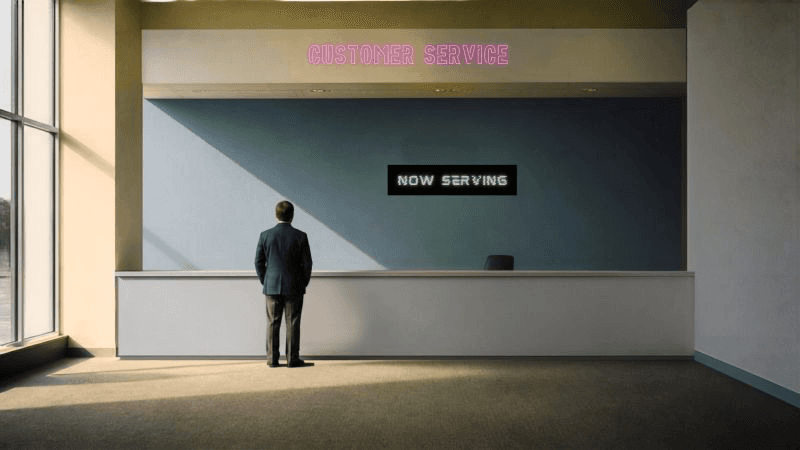
You transfer money and trust the bank to move it. You buy a house and trust an escrow agent to hold the funds until the deed clears. You book a flight and trust that if it's cancelled, someone will process the refund. None of these promises keep themselves. Behind each one sits an institution — a bank, a broker, ultimately a court — whose job is to step in when a promise is broken. For most of history, that was the only way it could work. An agreement between strangers needed a third party to enforce it. Trust had to have an address.
That is quietly beginning to change, and the change has a name most people outside of technology have never heard: the smart contract.
The term was coined in the 1990s by a computer scientist named Nick Szabo, years before the technology existed to build one. The idea was deceptively simple. What if an agreement could enforce itself — not a document describing what should happen, but software that makes it happen, automatically, the moment its conditions are met, with no clerk, no broker, no waiting?
A crude version already governs your day. A subway turnstile is a self-enforcing deal: pay the fare, the gate opens, no attendant required. What's changed is that we can now write these self-enforcing deals for almost anything — a loan, an insurance payout, the sale of a house — and set them loose to run on their own.
This is further along than most realize. Insurance policies now exist that pay you automatically when your flight is delayed, with no claim to file. Major financial institutions are issuing bonds and investment funds as self-executing code. Digital dollars that move by smart contract are settling sums that rival established payment networks. Quietly, transaction by transaction, the middleman is being written out.
This is either liberating or unnerving depending on where you sit, and in truth it is both. A promise that enforces itself cannot drag its feet, cannot play favorites, cannot lose your paperwork. But it also cannot be reasoned with. It does exactly what it was written to do — not what you meant, not what would be fair, not what a human clerk would obviously understand. There is no manager to appeal to. When one of these agreements is written badly, the failure is not a dispute to settle later. It is instant, automatic, and usually irreversible.
Which is why it's worth understanding now, before it becomes invisible infrastructure — the way almost no one thinks about how a card payment clears, though it happens billions of times a day. The agreements now being built will run the same way: silently, constantly, beneath everything.
The old world asked whether you could trust the person across the table. The new one asks a stranger question: can you trust the wording? Because once the deal is running, the wording is all there is.
We'll spend the next decade finding out.
Read more Insights — and follow us on LinkedIn and X for new articles as they are published.